
You’re Not Alone in This
Every caregiver’s story is unique, but many emotions and experiences overlap.
I’ve sat across many caregivers. They all have some similarities. Tired eyes, restless hands, a quiver in their voice, and soft forced smiles trying to hide their exhaustion. They show up for their loved ones every day. And slowly, almost invisibly, they begin to fade away themselves.
Burnout doesn’t come crashing in all at once. It creeps in gently, like a slow leak in a tire, until one day, you can’t move the way you used to.
If you are caring for someone who is seriously ill, aging, or nearing the end of life, I want you to take a breath and ask:
How am I doing, really?
Because caregiving, though full of meaning, can also be incredibly draining.
What is Caregiver Burnout?
Burnout, in general, is a state of physical, emotional, and mental exhaustion. It can happen to anyone, not just to caregivers. But among caregivers, it often surfaces when the demands outweigh the resources: time, energy, support, space.
Most caregivers have told me they feel guilty even thinking about their own needs. They feel torn between gratitude for their health and grief over their loved one’s decline. This emotional tug-of-war slowly chips away at their ability and will to give their all.
But let me tell this clearly- Ignoring your well-being doesn’t make you a better caregiver. It just makes caregiving harder than it already is.
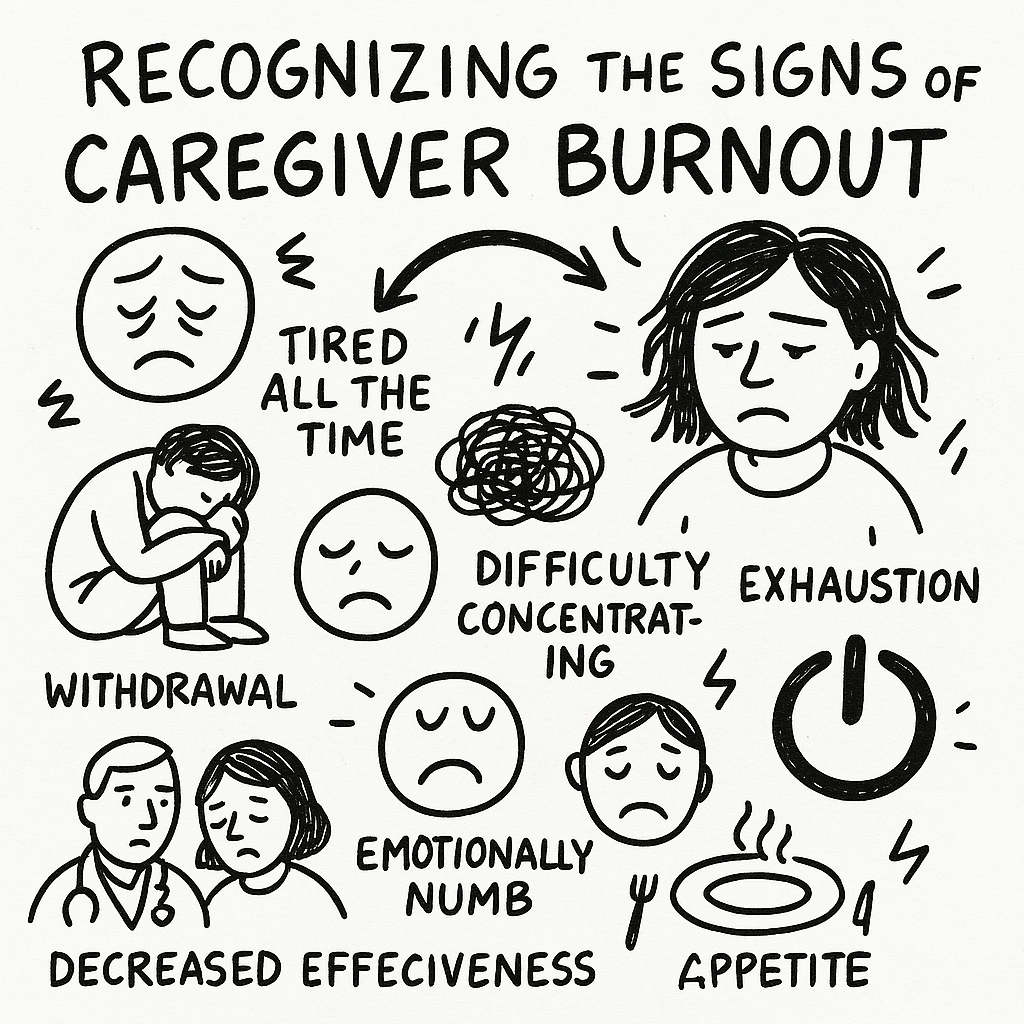
Signs You Might Be Burning Out
You don’t need to check every box. Even one or two can be a sign to pause.
- You feel tired all the time, even after rest
- You’re more irritable or impatient than usual
- You’re withdrawing from friends or things you used to enjoy
- You catch frequent colds or feel physically unwell
- You feel helpless, hopeless, or emotionally numb
- You’re forgetting things or struggling to focus
- You’ve lost your appetite—or find yourself overeating
- You feel like you’re on autopilot, just getting through the day
- You cry easily, or not at all, even when you’re hurting
P.S. As said earlier, these signs of burnout hold true for everyone, not just caregivers
(TMI: I ticked all of these when I decided to resign from my last role! Shh.. top secret 🤫).
A Quick Self-Check
Take a moment to reflect. Answer honestly:
- Do I feel resentful or overwhelmed by caregiving?
- When did I last do something just for myself?
- Am I sleeping, eating, and moving my body regularly?
- Do I feel supported or alone in this journey?
If your answers raise a red flag, please know: you’re not failing. You’re simply human.
Why It Matters?
Because burnout is real. It’s unforgiving. And it’s incredibly easy to normalize. If left unaddressed, burnout can lead to serious health issues, both physical and mental. As a caregiver, it can also affect the quality of care your loved one receives. Burnout is like thief that steals the sense of connection, love, and presence that make caregiving meaningful in the first place.
I cannot emphasize it enough, your well-being is not separate from your role as a caregiver. It is central to it. And therefore, crucial for it.
You Are Not Alone!
One of the most powerful things you can do is ask for help. Because no caregiver should walk alone. That might mean:
- Reaching out to family or friends to share responsibilities. (Let go of that ego, one tiny bit at a time.)
- Speaking to a counselor or joining a caregiver support group. (Similar minds, shared struggles -they build a quiet inner strength.)
- Taking breaks, even short ones, to recharge
- Saying No when your plate is already full
- Talking to a professional who understands the weight of caregiving
If you don’t know where to begin, I’d be honored to listen.
💬 Book a one-on-one consult here Let’s make it a space to pause, reflect, and feel heard.
Let This Be Your Reminder
You are doing something deeply sacred. But you don’t have to do it alone, and you don’t have to do it at the cost of your own health.
Recognising burnout isn’t a sign of weakness, it is the first step towards your attempt in restoring balance. Listen to that hum and voice it.
Take care of yourself, the way you take care of others.
You deserve that too.
💬 I invite you to share a part of your journey in the comments below.
Your words might help someone else feel seen, understood, or a little less alone.
And if you’re seeking a safe space to connect with others walking this path…
👉 Join Our Caregiver Support Group
A quiet corner of the internet to share, listen, and just be—without judgment.


Leave a comment