Frequently Asked Questions (FAQs)
What is Palliative Care?
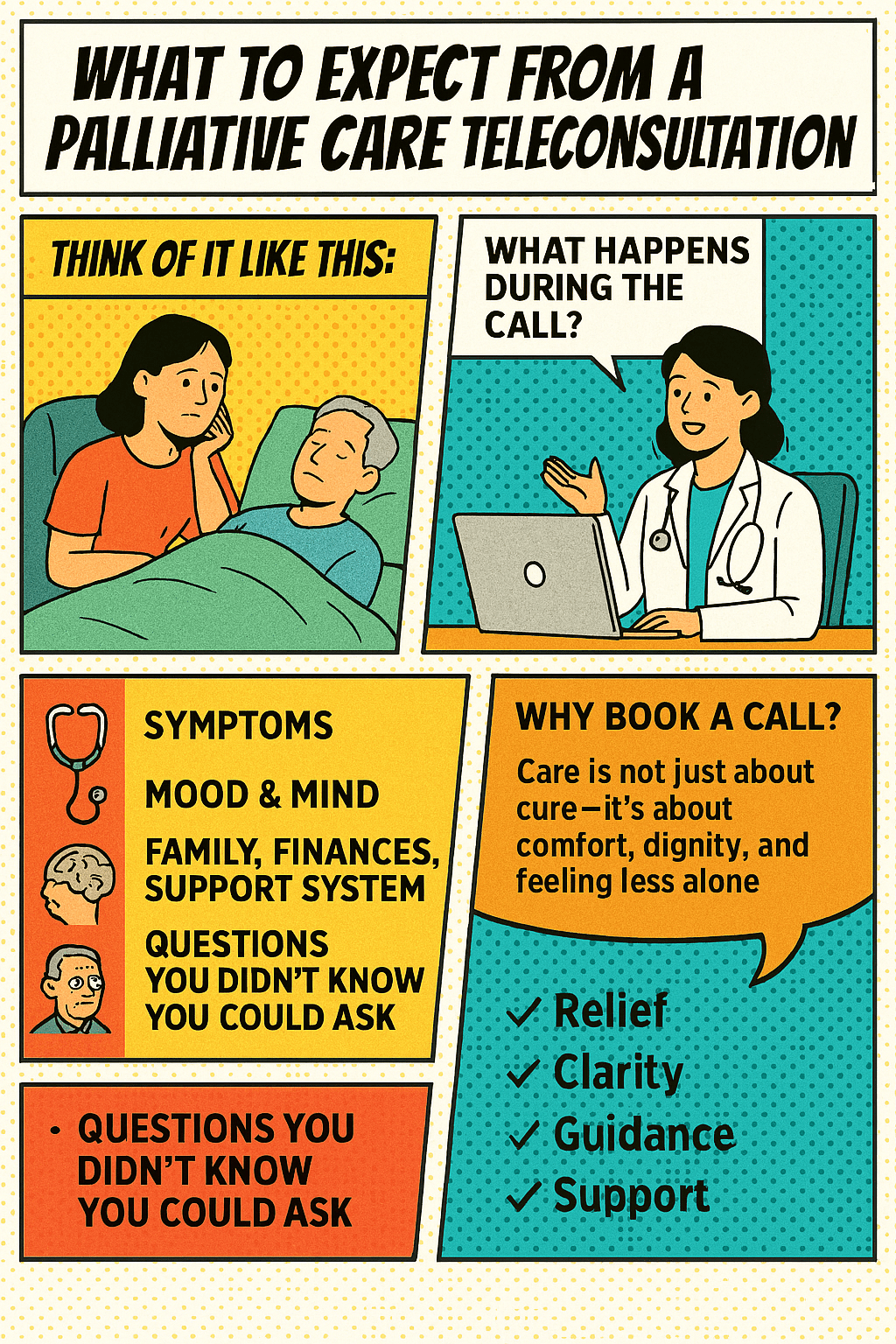
Palliative care is specialized medical care that focuses on providing relief from symptoms and stress of serious illnesses. The goal is to improve the quality of life for patients and their families.
Who can benefit from Palliative Care?
Anyone suffering from serious or chronic illnesses such as cancer, heart failure, lung diseases, kidney disease, Alzheimer’s, or any condition causing significant discomfort or stress can benefit.
When should someone start receiving Palliative Care?
Palliative care can start at any stage of a serious illness and is often provided alongside curative treatments.
Does receiving Palliative Care mean giving up on other treatments?
No. Palliative care complements other treatments and helps manage symptoms while patients continue receiving treatment aimed at curing or managing their illness.
Where is Palliative Care provided?
Palliative care can be provided at home, hospitals, outpatient clinics, hospices, or nursing homes, depending on the needs of the patient and family.
What symptoms does Palliative Care help manage?
It helps manage symptoms such as pain, shortness of breath, fatigue, nausea, loss of appetite, difficulty sleeping, emotional or psychological stress, constipation, diarrhoea, anxiety, mucositis, wound care, bedsore management, and provides social and spiritual distress counselling with other disease specific and non medical distresses.
Who provides Palliative Care?
A specially trained team including doctors, nurses, social workers, counselors, nutritionists, and other healthcare professionals collaboratively provide palliative care.
Is Palliative Care the same as Hospice?
No. Hospice care specifically supports those nearing the end of life. Palliative care, however, can be provided at any illness stage, even alongside treatments aimed at curing the illness.
How can I schedule a teleconsultation for Palliative Care?
You can easily book a teleconsultation through our online booking system (Calendly) by selecting a convenient date and time.
Is Palliative Care covered by insurance?
Many health insurance plans cover palliative care. It’s recommended to consult your insurance provider for specific details regarding coverage.
What support is available for caregivers?
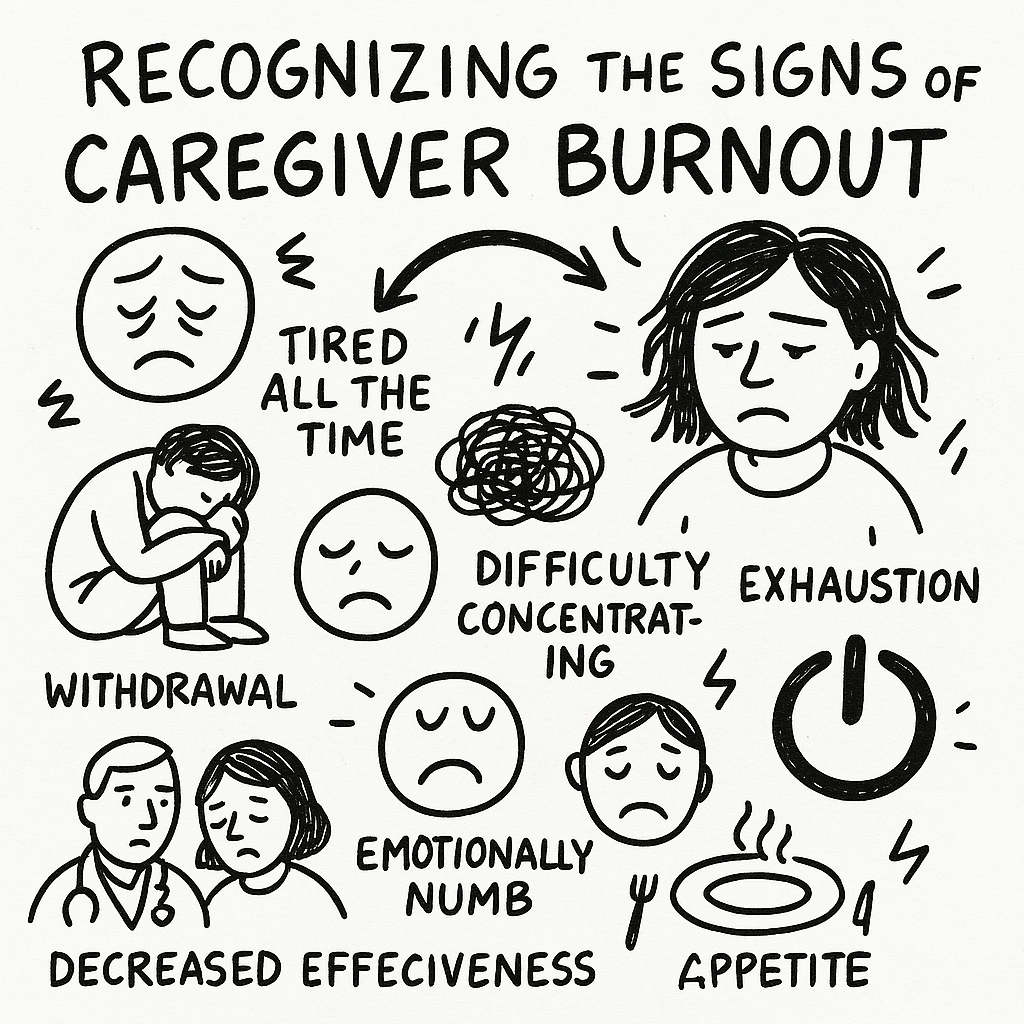
Caregivers can receive emotional support, counselling, education, and practical tips to better manage their role. Respite care options may also be available to give caregivers a necessary break.
What is Respite Care?
Respite care provides temporary relief for primary caregivers, giving them time to rest, recharge, or handle personal matters while ensuring continued care for their loved one.
What is Advance Care Planning?
Advance care planning involves discussing and documenting healthcare preferences and end-of-life decisions in advance, ensuring care aligns with the patient’s wishes.
What does End-of-Life Care entail?
End-of-life care focuses on comfort, symptom management, emotional and spiritual support, and ensuring dignity and respect in the final stages of life.
What are the Indian laws regarding Palliative Care?
Indian laws, such as the Supreme Court guidelines from 2018, permit patients or their families to make informed decisions regarding withholding or withdrawing life-sustaining treatments under specific conditions.
What is the difference between withholding/withdrawing care and euthanasia?
Withholding or withdrawing care involves legally permissible decisions to avoid or stop life-sustaining treatments when they are no longer beneficial or desired. Euthanasia, however, actively involves ending life and is illegal in India.
Is Euthanasia legal in India?
Euthanasia, or mercy killing, is currently illegal in India. However, withholding or withdrawing life-sustaining treatments under strict guidelines is permitted based on the Supreme Court guidelines of 2018.